Tuesday, June 26, 2018

5 Indispensable Tips to Nail B2B Media Relations

Nail B2B Media Relations

It would be a mistake to lump B2B media relations in with general PR practices; simply because it is so unique and layered. B2C PR deals with the everyday consumer whose priorities are probably quite different from the corporate folk that B2B companies are trying to communicate with.

Due to these vast differences, the entire PR strategy for a B2B company should have its own set of goals and priorities. B2B companies are beginning to understand just how important media relations is as 75 percent of businesses plan to up their PR spending in the coming year. However, simply spending more does not always ensure success. In fact, an expensive strategy can be just as ineffective as a cheap one.

As PR expert Ben Veal put it:

“The key to successful B2B PR is accurately identifying an audience and their drivers, and then developing tailored content that is specifically designed to engage and resonate. This content needs to be released at the right time and in the right format to ensure that the decision-makers you are targeting are reached and understand the message.”

Let’s discuss some tips and ideas that can help get your B2B media relations campaign on the right track.

1. Understand Key Decision Makers’ Pain Points

Obviously, a B2B decision maker is going to have different priorities than a B2C shopper would. They are looking for a service or product to help their business succeed, so it must have clear benefits that will affect their bottom line, as well as day-to-day operations. Unlike the average consumer, B2B customers are not necessarily looking for the best deal or the latest technology. They are more interested in the end result.

To create the type of media content that will attract and convert executives, marketers and PR pros must understand what makes them tick and what content influences them the most.

There are some key statistics to keep in mind for this task.

  • Roughly two-thirds of the buyer’s journey for B2B decision makers is conducted online. This means that most of the awareness and introduction phase is completed digitally, and customers do not reach out to sales departments directly until far later in the journey.
  • 80 percent of B2B buyers prefer to collect information about the product or service through articles and quality content, rather than advertisements. Of course, this online content plays a major role in their purchase decision.

This means that the subject of your content must be highly relevant to your target customers’ pain points and concerns. Nearly half of all consumers check out three to five pieces of content before they reach out to a salesperson, so they must thoroughly answer the most burning questions.

Seeing what your most common customer inquiries are about is a good starting point. These FAQs can guide your PR strategy in the right direction by identifying common patterns.

2. Segment Wisely 

In today’s B2B market, customers are as vast and wide as ever. That being said, client segmentation is certainly not a one-size-fits-all entity, as a B2B’s audiences can vary quite a bit. Therefore, B2B media teams must understand their diverse audiences and how to address each segment accurately.

There are essentially three key methods that B2B companies should utilize in order to properly categorize their customers for more relevant marketing and media strategies.
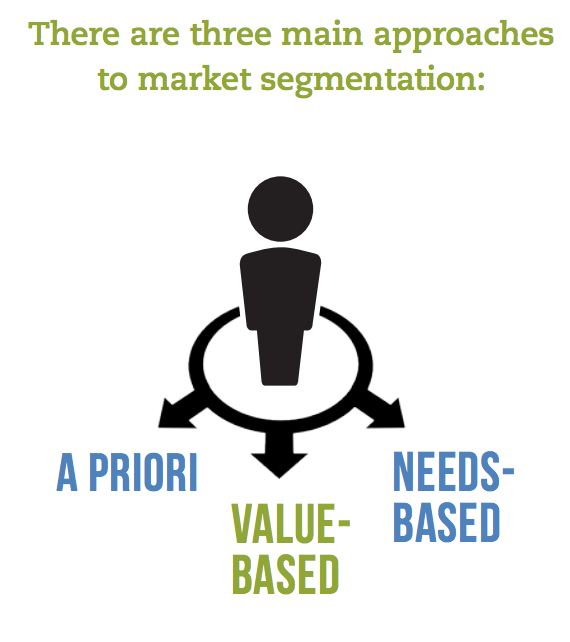
Market segmentation

Source

The first category is A priori segmentation, otherwise known as public data segmentation. This means that potential clients are organized by common data, such as company size, location, or industry niche. This type of segmentation is fairly simple and straightforward; however, it should only be a starting point. After all, two companies may be the same size but have totally different priorities and budgets — two factors that could make generic content totally irrelevant to them.

The next type of segmentation is value-based, which involves separating clients into categories based on their expected spending budgets and how well they match your goals. For example, if an industry leader is interested in your product/service and converts, they could be valuable for future sales because it increases your credibility. However, this could mean that smaller businesses and clients get pushed to the wayside because they are viewed as “less valuable” due to their smaller budgets.

The final (and arguably most accurate) form of segmentation is needs-based. This means that potential clients are separated based on their specific product or service requirements. This information can be determined through market research, consumer information, or sales transactions. The goal is to discover trends for each segment and determine client needs based on behavior and preferences.

By segmenting customers properly, media relations teams can better understand how to address their clients with their messaging and play to each segment’s needs and priorities.

3. Use Timely Data

Customer data should be a key part of any B2B business’s media relations strategy, but it is vitally important that this information is as accurate and fresh as possible. While many marketing and PR teams report that they are trying to integrate more data-driven messaging for their customers, 74 percent of their customers are unsatisfied with their content because it is not relevant to their interests.

This is why timely data is absolutely necessary so that messages, promotions, or content pieces are more in-line with your target audience’s needs in the moment. For example, media teams can track past shopping behaviors by gathering consumer data from POS transactions to identify customer profiles. From here, these people can be better targeted for related content to help them make the most of your company’s services.

It’s a fact that customers appreciate personalized content, and 98 percent of marketing experts report that it has some degree of impact on building better customer relationships. However, the only way to sustain a personalization strategy in media relations is by gathering and analyzing data as quickly and as often as possible. Be sure that your team’s data collection methods are in-the-moment and updated regularly for the best results.

4. Create Smooth Buyer’s Journey Transitions

The buyer’s journey for B2C consumers is usually simple, straightforward and fast. Once customers are made aware of the brand or product, they consider their options and make a quick decision.

However, the journey for B2B customers is far lengthier and complicated. After all, the typical shopper does not have thousands — or millions — of dollars in their spending budgets.

Additionally, B2C purchase decisions tend to be a “one and done” type of deal. They consider their options, choose whichever product best fits their ideal situation and buy it. However, the B2B buyer’s journey is far more layered. First of all, there are normally several decision-makers who must come to an agreement, rather than just a single consumer. Moreover, the customer journey usually takes far longer — most purchase decisions are made months after an initial inquiry.

It is up to media relations teams to ensure that each step along the way is as easy and seamless as possible. Any kinks could result in lost revenue. It is necessary for teams to understand the role that their media messages play and focus on building trust and customer confidence to make the transitions smooth.

5. Edit, Edit Some More, and Edit Again

Though the PR world is notoriously fast-paced, this does not give media teams the excuse to skip over the editing process. Simple mistakes like misspellings, unclear verbiage, or unverified information can totally destroy a brand’s credibility and do far more damage than a delayed but correct response would.

Unfortunately, according to Edelman’s Trust Barometer, public confidence in the media is quite low, which means that brands must be extremely careful that every posted message is accurate and truthful. The only way to do this is by checking, editing, changing and editing again in order to ensure that nothing slips through the cracks.

Conclusion

The realm of B2B PR is truly a breed of its own. It has such an immense impact on conversions, brand trust and customer satisfaction, that its importance cannot be understated.

To make sure that your B2B business gets its media relations strategy right, it is important to always keep the customers’ pain points first and foremost. Identify their burning questions and address them through quality content. Be sure to understand which category each client fits into to target them with more relevant messages. Use data collection systems to gather and analyze information relevant to potential customers’ needs. By doing so, the transition from visitor-to-customer-to-advocate can be much smoother.
10 Tips for Getting Pitches Read CTA.png

About Manish Dudharejia

Manish Dudharejia is the President and Co-Founder of E2M Solutions Inc, a San Diego Based Digital Agency that specializes in Website Design & Development and eCommerce SEO. With over 10 years of experience in the Technology and Digital Marketing industry, Manish is passionate about helping online businesses to take their branding to the next level.


from Blogs https://ift.tt/2KqU8vB

4 alternatives to spewing your boring agency news

Your anniversary announcement isn’t as special as you think.

It might be a bitter pill to swallow for some communicators, but reporters—and, more important, their readers—do not care about your 20 years of business operation. They don’t care about your latest “exciting hire.” They don’t care that you now represent a multinational corporation pursuing thrilling initiatives.

Readers care about how your news affects them—and if it doesn’t, they will skip your article without hesitation.

Here at PR Daily, we get hundreds of pitches asking us to include bulletins about hires, promotions or new client partnerships—and they all go to the trash. These stories don’t get shared with or by our audience. They are lazy attempts at promotion, and they offer no value for our readers.

An oft-cited writing principle is to “show, not tell.” The idea is to let dynamic examples help your audience draw their own conclusions rather than just droning on about the importance of your message.

Announcing mundane happenings is the pitching equivalent of shouting from the rooftops that your organization is great, without offering proof. Still, executives want such press releases sent out widely.

Here are ways to repackage your industry news to get the coverage you want:

1. Turn new hires into profiles in industry leadership.

Surely there is a reason you want hiring notices to be published in a trade paper or magazine. New team members represent exciting opportunities and newfound expertise. They have something to offer—so get them to share it in a guest post.

PR Daily is always looking for thoughtful industry analysis or actionable tips for modern PR professionals. If your new hire is as wonderful as you believe them to be, certainly they have insights to share.

[FREE DOWNLOAD: How reporters use social media in their jobs]

2. Make anniversaries about developing industry trends.

Congratulations on your storied success in the PR industry. If you have a newsworthy anniversary to share, that means you’ve been there for years of volatile change, including the advent of social media and the demise of the press release. You’ve got a unique perspective on how the industry has changed and where new technology and best practices will lead.

Make sure your opinions are evidence-based, and avoid talking about only your organization. Repeated mentions of your success signal a futile attempt at self-promotion, and editors will discard the article.

3. Ask promoted leaders to offer expert commentary.

Talented senior leaders have their finger on the pulse of the industry. That means they can offer insight into big news stories that touch on industry goals.

Reporters are often looking for expert commentary to give context for their reporting and will be happy to include snappy, relevant quotes from a qualified source. Ask your principal to quickly supply a quote on a hot-button issue, or offer to set up an interview.

Remember that reporters are busy, often on tight deadlines. If your quote comes too late, you’ll miss your opportunity. Likewise, if you offer to set up an interview for a breaking news story, a reporter is likely to ignore your query in favor of less work-intensive reporting.

An important resource for these communications is HARO, the online portal for reaching hundreds of reporters looking for sources.

4. Use new clients as examples of shifting industry priorities.

If your nascent working relationship is newsworthy, it probably touches on emerging industry trends or concerns. Broaden your unique example to make a case about the wider PR workforce.

Does your new social media partnership offer a new path for PR practitioners? What do PR pros have to offer the tech entrepreneurs of Silicon Valley?

If you can’t make a bold and compelling case, your news—well, it isn’t news.

Even if a trade publication is willing to publish your agency announcement in a roundup of industry news, that brief mention is worth less than you think. As search engines reprioritize their algorithms to favor high-qualitycontent over raw mention metrics, a meaningful profile featuring your organization will matter more than a simple link.

How are you repackaging your industry news, PR Daily readers?

(Image via)


from PR Daily News Feed https://ift.tt/2KkPEqn

7 Cheap Ways to Travel Across Europe

Train station in Europe
Updated: 6/26/18 | June 26th, 2018

Traveling around Europe can be fairly expensive. Airline tickets, high-speed trains, overnight trains, ferries – they can all eat into your limited and precious travel budget. I mean you came to spend money on delicious food and wine, not transportation!

However, there are a few recent trends that have helped travelers get around Europe cheaper: weaker currency exchange rates, the rise of the sharing economy, new bus options, and lots of new budget airlines.

The 7 Best Ways To Travel Europe Cheap

Travelling Europe by Megabus

 One of the cheapest ways to get around Europe is Megabus
Megabus is a cheap way to get around the United Kingdom (England, Scotland, Wales) as well as to Paris, Brussels, and Amsterdam. Tickets can cost as little as 1 GBP if you book at least a month in advance on popular routes to get these fares. However, even if you don’t scoop up these amazingly cheap deals, you can still travel for a more reasonable price than on the national bus system, as fares rarely top 20 GBP. I recently took a 5 GBP bus from London to Bristol. (The train? 45 GBP!) That ticket was only bought the day before too! Additionally, Megabus also operates trains to some destinations around the UK, starting at 10 GBP. Megabus is definitely the cheapest way to get around the UK and now is also the cheapest way to get to Paris, Brussels, or Amsterdam.

Travelling Europe by Busabout

 Hop on and Off With Busabout, A Cheap Way To Travel Europe
Busabout is a hop-on/hop-off bus service primarily used by backpackers, similar to the Oz or Kiwi Experience in Australia and New Zealand, respectively. You can get on and off whenever you want along one of their set routes. You can buy tickets that let you travel their whole network with a set number of stops. For example, a nine-day flex-pass, which gives you nine stops from your starting city. The only downside to Busabout is that if you want to visit a city not on their route, you have to make your own way there at an added cost. A lot of backpackers use this method of travel to get around as well as meet other travelers. The pass also comes with a guide and sometimes include group activities. A two-week pass is $299 USD. If you figure you can visit about 6 cities in two weeks, that’s $50 a trip. When you consider the soft benefits of a guide, included trips, and meeting people, Busabout becomes price comparable to trains and flights, though still more expensive than a regular public bus! Their unlimited passes for $1,499 for 6 months of travel is the best long-term transportation deal.

Travelling Europe by Flixbus

Flixbus in Europe
Over the last few years, a new company has come on the market that has totally changed the bus system in Europe! German based Flixbus has routes in 20 European countries and thousands of cities with prices starting as low 5 EUR. Their buses include WiFi, electrical outlets, up to three 3 free bags, and comfy seats. It’s essentially Megabus, but less sucky and for the whole of continental Europe. Flixbus quickly became my favorite non-train way to get across Europe cheaper after it came out. It’s the best and cheapest way to get around continental Europe!

Another option is to take Eurolines. Every country in Europe has its own national bus service but for international long distance bus routes, they sort of combine into the umbrella company, Eurolines. While they serve more destinations than Flixbus, I prefer the comfort and prices of Flxibus if I have a choice between the two. Eurolines prices usually start at around 20 Euros for a 5-6 hour journey.

Travelling Europe by Budget Airline

 Budget Airlines Like Ryanair are The Cheapest Options For Getting Around Europe
By far one of the cheapest ways to travel long distance in Europe is by budget airline. These airlines are hugely prolific on the continent and competition leads to incredibly cheap fares. You can often find fares as cheap as 1 Euro. When I need to go somewhere and I don’t want to take a long bus or train journey, I fly budget airlines. My favorite budget airlines are:

I use Skyscanner and Momondo to search for the best deals. They do all the legwork for ya!

It’s important to remember that these budget airlines make most of their money through fees, and the second you mess up, they whack you with a fee. They are very strict about baggage limits or forgetting to print out your boarding pass. Be sure to follow their rules to the letter. Sometimes these budget airlines cost more money because of all their fees so if you’re traveling with a lot of bags, it may be cheaper to fly with one of the larger airlines (which have also lowered their fares in the face of tough competition).

For more information, here is a complete guide to finding cheap flights around Europe.

Travelling Europe With A Eurail Pass

 Travel Vast Distances Using The European Rail System
Getting a rail pass is a good option if you are going to be traveling across vast distances and don’t want to fly. The European rail system is one of the best and most extensive in the world. I love traveling by train. Sitting in a big seat, relaxing with a book, and watching the stunning landscape go by. It’s more comfortable than a bus and much less stressful than air travel.

If you’re going to travel by train, it’s hard to beat them on price and convenience for short city to city travel. For longer journeys (overnight journeys, between countries, or rides that require a high-speed line like Paris to Bordeaux or Berlin to Munich), trains tend to be very expensive. If you plan to travel around Europe in a grand tour, a rail pass is your best money saving travel option. Your cost per trip will be a lot lower than if you were to buy these tickets separately.

For more information, here is a complete breakdown of Eurail passes and when they should be used to save money.

Travelling Europe Using BlaBlaCar

 Save Money by Ride Sharing Throughout Europe.
The rise of the sharing economy has allowed people to hop a ride with locals going their way, and BlaBlaCar is the reigning king of this service. Hugely popular and widespread in Europe, I’ve used this service many times. This website lets you rideshare with people who have extra space in their car. You find a ride, they agree to take you, and off you go. You can find rides for as little as 5 Euros. It is the best, BEST paid way to get around Europe. You get to meet a local, have a friendly conversation, save tons of money over bus and train travel, and get off the highways and more the countryside.

Alternatively, there are websites where you can ask for rides so long as you pitch in for gas. Gumtree is the most popular among backpackers.

The Cheapest Way To Travel Europe: Hitchhiking

 The Cheapest Way to Travel Europe is Hitchhiking
The best way to travel Europe cheap is to not pay for it. Hitching is quite common in Europe, and I’ve met a number of travelers who have done it. I myself traveled this way in Bulgaria. It’s important to use your head when hitchhiking.

***

There are a lot of ways to get around Europe on a budget. But what’s the best way for your trip? MIX AND MATCH YOUR TRANSPORTATION. The key to traveling around Europe on the cheap is to know when to use each one of the listed transportation methods. For short trips, I like trains and BlaBlaCar. For medium length trips (half a day), I’ll take a bus, BlaBlaBla car, or train. For long distances, I fly, take a high-speed train, or overnight buses. If you have no preference on how you travel – you just want the cheapest – use a website like Rome2Rio. All you have to do is enter where you are going and they will find all the ways to get there and list the prices for each method.

When you are looking for cheap ways to travel Europe, use the transportation options above that suit your needs and you’ll always get the best deal!

Next step: keep planning your trip to Europe with these articles:

Photo Credits: 2, 4

The post 7 Cheap Ways to Travel Across Europe appeared first on Nomadic Matt's Travel Site.


from Nomadic Matt's Travel Site https://ift.tt/2Iuy55x

Category Kings, Marketing Automation, and a Founding Member Interview

I’ve written about category kings before: it’s what every startup should be striving for.

There’s one unquestioned “Category King” in real estate. Among real estate portals (in the US), the clear, runaway king is Zillow Group.

There will be “Category Kings” of various segments of the industry, and I think we’re seeing one of them emerge.

Imprev, in marketing automation.

The Imprev platform already powers the marketing centers for hundreds of brokerages and franchises—representing over 20% of real estate agents in North America—including RE/MAX, Coldwell Banker, Berkshire Hathaway Home Services, Corcoran Group, NextHome, Realty World, and Hunt Real Estate, as well as Homes.com and MRIS. Founded in 2001, Imprev is an example of a company that remains in the slow and steady wins the race camp. That’s my type of business. They aren’t flashy. They don’t overpromise. They don’t care if they are on stage. They plug away with improving their product and increasing their sales one day at a time. Every single day, month after month. Year after year.

You may have seen the recent Imprev partnership with NextHome, a real estate franchise with 290 offices and over 2,400 agents. The company also owns the Realty World Northern California & Northern Nevada franchise networks, collectively controlling over 400 offices and more than 3,000 agents. The company closes over 14,000 transactions annually worth over $4.6B in volume, and is more often than not one of the companies in contention when brokers/agents are considering a change of brokerage (see here).

In the press release, James Dwiggins, the NextHome CEO, says “We’re Raising the Bar in Real Estate Marketing”. That obviously implies that Imprev’s platform is helping facilitating that. To me, the Nexthome deal marks another major notch in Imprev’s quest toward domination of marketing automation in the real estate industry. I’ve know their CEO, Renwick Congdon, for quite a few years (see his meet the RE tech entrepreneur interview from last year). He’s a class act. We’re fortunate to have him as a founding member of the Geek Estate Mastermind. I had the pleasure to ask him a few questions to dig more into their recent work and where he sees the industry heading.

What’s Your most significant business focus for 2018?

Helping brokerages and franchises build stronger relationships with their agents through marketing automation. Marketing automation helps the broker act as a “marketing guide” for their agents and systematizes best practices to make everyone more successful. This is a key service where the broker can offer tangible value to their agents. For example, marketing a luxury home in Los Angeles requires different steps and workflows than a starter home in Indiana. The broker has the benefit of looking at all the company’s listings and pinpointing trends, successes, and failures, then using that knowledge to automatically recommend the next best steps to not only market a new listing, but to use that marketing to generate more business. That type of support is powerful!

When did you originally realize marketing automation was where the company would make its mark, and what’s been the hardest part of fulfilling your vision?

Since 1992 when I wrote my first marketing software program—before I started Imprev—I’ve had the vision of handing real estate agents all the marketing materials they need to promote a listing and their business. The hardest part has been waiting for technology to catch up. When I started Imprev in 2000, our technology was able to deliver functionality that few other companies could match. Agents could create all their materials, from flyers to flash multi-media, within a very easy user interface, and they had access to hundreds of professionally-designed templates.

In 2015 we felt the technology to create all the design work for agents automatically was ready for scale. We launched our first client on automation, Berkshire Hathaway HomeServices Fox & Roach, REALTORS®, and haven’t slowed down since. Today we have 212,000 agents experiencing marketing automation and are generating millions of pieces of marketing across print, digital, social and video.

What’s next for marketing automation?

Continuing to help brokerages and agents generate more business from the listings they already have on a larger scale. Opportunities include leveraging the vast amounts of data out there to automate hyperlocal marketing for agents. I find that idea really interesting. The portals have a tight grip on the consumer right now; how can we change that and give some of the power back to brokerages? I believe that automation—used correctly—will bring agents and brokers closer to the consumer. Every day we’re expanding the scale of what automation can handle.

What real estate technology trend or product are you most excited about?

Artificial intelligence. I see AI as telling the computer the rules, and letting it figure out the options, versus machine learning, which just shows the computer a bunch of experiences that it can choose from.

What do you like about being a Geek Estate Mastermind member?

Connecting with really smart people about cutting-edge topics. Drew brings up subjects that are so far advanced; it’s a great reminder to keep an eye on the future and make sure we’re prepared for the next big thing.

Congratulations, Renwick and Imprev. Welcome to the throne as the category king for marketing automation in the real estate vertical.

[Graphic via https://www.colourbox.com]

The post Category Kings, Marketing Automation, and a Founding Member Interview appeared first on GeekEstate Blog.


from GeekEstate Blog https://ift.tt/2yMp7kA

6 crucial parts of a PR apology

There’s more to an apology than simply saying you’re sorry.

Without question, the first step to getting past any reputational crisis is apologizing for the wrongdoing. Research shows that there’s actually a psychological benefit to true apologies. For the person wronged, she undergoes a feeling of emotional healing. What’s more, she no longer views the person who wronged her as a personal threat.

Beyond psychology, offering a true apology can often diffuse a situation that might spiral out of control on social media, in the workplace or in your business relationships. The perception that you are not only truly sorry, but that you will learn from your error, eases crisis situations and can form the basis of you reclaiming your personal or professional reputation.

[FREE GUIDE: 3 helpful tips for your crisis comms prep]

What’s the best way to apologize? There’s some science behind that. The Ohio State University found in two separate studies that there are six elements to an effective apology—and the more facets you cover, the better your outcome:

1. Expression of regret

You must actually be sorry for people to believe you are sorry. Sometimes, communicators fall into the trap of being more regretful about how a situation has unfolded than about the actions that led to the crisis. You have to have the empathy for the person or group that was wronged to truly feel regret for the action, rather than the reaction.

2. Explanation of what went wrong

More often than not, people don’t want to hear your excuses, but an explanation isn’t an excuse. Listing the facts and telling your side of the story in a way that helps the wronged party truly understand can give perspective.

3. Acknowledgment of responsibility

You must own it. The worst apologies come when the audience doesn’t think you’ve learned a thing from the incident. You know the kind: “I’m sorry for the reaction this has caused,” or, “I’m sorry some people had a problem with this.” When you screw up, make sure everyone knows the buck stops with you.

4. Declaration of repentance

Once you’ve taken responsibility, you have to show that you have turned away from whatever shortcomings led to your mistakes. It’s a change of mindset and behavior.

5. Offer of repair

If you can fix something, then fix it. It is grating and disingenuous to make an apology but not take a tangible step to repair the situation. This is especially true in a reputational crisis. Showing you are taking steps to repair a situation tells your stakeholders that you are willing to put in the work to fix a situation.

6. Request for forgiveness

This is a tricky one. There are some people who will forgive and move on. Others, particularly in the sharpened-knife cesspool of social media, will never forgive, or discount your apology altogether. However, you should always ask for forgiveness. If someone wants to deny you their forgiveness, that’s up to them and their conscience.

All of the above steps have a common theme: When you’ve screwed up, at work or at home, how you show the depth of your contrition matters more than simply the words you say. Be successful and thoughtful in your apology and you will go a long way toward rescuing the reputation you worked so hard to build.

Ray Hennessey is the Chief Innovation Officer for JConnelly. A version of this article originally ran on the JConnelly blog.

(Image via)


from PR Daily News Feed https://ift.tt/2yGtihW

Don’t miss your chance to share your compelling health care campaign


from PR Daily News Feed https://ift.tt/2MqQPp3

Ask these 8 key questions before sending out your email

Even veteran email marketers get the jitters when they finally send the message they worked so hard to perfect.

A mistake in an email might not doom your campaign (though it could), but it’s natural to worry that you might have missed something—and catastrophize about the consequences.

[Report: Email best practices that will catapult your results]

If your answer to each of the questions below is “yes,” then your message is probably good go. If you reply to any with “no,” you’ll probably want to take another look at it. Here you go:

1. Has my message been thoroughly proofread?

“Any errors in your emails will damage the credibility and reputation of your business,” Mary Walton writes on the MailUp blog. “Proofreading can take time, and it may seem long-winded to go through your content again and again, but it’s vital to the success of your content. After all, would you want to buy the products or invest in the services of a business whose content was littered with mistakes?” Need help? Here’s a 14-point email copy checklist.

2. Will my subject line be noticed?

“While the subject line is often left until the last minute and doesn’t have a lot of thought put into it, almost half of all email recipients decide whether or not to open an email based on the subject line alone,” Jomel Alos writes on Moveable Ink. “That’s a 50 percent chance of your lead-building email efforts going to waste if you don’t pay attention to your subject lines.” In his post, Alos provides six tips for crafting subject lines that can’t be ignored.

3. Am I using a segmented mailing list?

“Your subscribers aren’t all the same,” Sam Hollis writes on the AWeber blog. “By segmenting, you can easily send them content they actually care about. This personalization can lead to higher open and click-through rates, lower unsubscribe rates, better deliverability and more conversions than non-segmented lists. In fact, segmented emails can drive up to 77 percent of your overall email ROI, according to the Direct Marketing Association.”

4. Is my call to action compelling, clear and obvious?

“If you want to convert more customers and earn more revenue from your email campaigns, you need to create calls to action (CTAs) that resonate with subscribers,” writes Emily Carter at Campaign Monitor. “These actions might be reading an article, browsing through an online store, or making a purchase. An effective CTA is well-designed, persuasive, specific, and in line with the rest of your sales funnel.”

5. Have I done all I can to personalize my message?

“When asked to prioritize one capability that will be most important to marketing in the future, 33 percent of marketers answered ‘personalization,’” according to our friends at Campaign Monitor. “Furthermore, 74 percent of marketers say targeted personalization increases customer engagement and that they see an average increase of 20 percent in sales when using personalized experiences.” To make sure you aren’t missing anything when it comes to personalization, check out “The Ultimate Email Marketing Personalization Checklist.”

6. Is my message optimized to be read on mobile devices?

“There’s no doubt about it: These days, your messages are most likely going to be opened on a mobile device,” we wrote. “The trend has been heading in that direction for quite a while, and it was confirmed in a study conducted by Return Path last summer of 27 billion email opens. As Email Marketing Daily reported: ‘Fifty-five percent of emails analyzed during the study period were opened on a mobile device — an increase from 29 percent identified in a similar study in 2012.’ Other studies have indicated the percentage is even higher.” Here are eight tips to make sure your message is mobile-ready.

7. Is my message unlikely to trigger spam filters?

“By keeping pesky spam emails away, spam filters increase user efficiency by sparing tedious manual sifting of legitimate messages and spam email deletion,” writes Technopedia. The article adds, “Even the best spam filters are unable to block 100 percent of spam messages and legitimate emails are often routed to junk email, or spam folders, as spam filters often misclassify legitimate emails.” Here’s more about spam filters and how to steer clear of them.

8. Does my message bring value to the recipient?

“The art of creating added value starts with the ability to see your business through the eyes of your customers,” Kimber Powers writes on the Vertical Response blog. “Consider what’s important to your target market and how your product or service will benefit them. What problem does it solve? How will it help them overcome obstacles or do their jobs better?” Here are six tips for providing value in your next message.

Kristen Dunleavy is senior content marketing manager of Movable Ink. A version of this post first appeared on the Movable Ink blog.

(Image via)


from PR Daily News Feed https://ift.tt/2yIPurB