Wednesday, April 10, 2019

Will Consumers Embrace iBuyers?

I’m a perpetual skeptic of “real estate disrupters”. I believe that Redfin and the other discount brokerages pick at the ~5% margin of sellers who would rather save 1% than have a good experience selling their homes. The massive boom of iBuyers seem to pick at the other end of the spectrum and cater to sellers who would rather give their homes away than put in some work to sell at FMV (less 6.5-7.5% in closing costs.) Because iBuyers are relatively new, we don’t know exactly what that market share is, but my gut is that it’s less than 5%. (Opendoor has been in Dallas for a few years and has ~2% of the market there.) So…it seems to me that these disrupters are fighting over ~10% of the market.

Napkin math shows that iBuyers can profitably purchase homes at a 15-20% discount. Marketing this honestly doesn’t sell. “Click here for a free offer 15-20% below market” would have a pretty poor conversion rate. So, iBuyers market the same way Homevestors has for years: “Sell your home instantly!” “Instant offer!” etc (offering cash and time certainty)… From there, the consumer gets an offer price and then service fees tacked on in order to soften the blow. It’s somewhat of a bait & switch.

As a savvy real estate veteran, I’m not surprised by this in any way. I’ve been curious how consumers would respond to it. After turning off my Adblocker a couple of months ago, I’ve been targeted by Opendoor and I’ve looked through their ads. A complete set of ads are available for review here.

Consumers can get an easy, competitive cash offer quickly (no mention of a discount):

It definitely seems like there’s been some consumer backlash and Opendoor is defensively addressing this:

What are some of these misconceptions? Primarily that they don’t provide competitive offers. From their ad:

“When we decided to try [Opendoor], it was with low expectations. They would never make a fair market value offer. Wrong. Their offer was completely fair. They would charge us a gazillion dollars on repairs. Wrong. They didn’t nickel and dime us, and they made it easy to know exactly what to fix. They would charge us too much to buy it. Wrong…

There were TONS of comments on this specific ad. A lot of the comments were clearly from agents, but many were clearly consumers. 90% angrily addressed the offer price the consumer received. One commenter asked why Opendoor removed reviews from their Facebook page and Opendoor responded that they were moved to https://www.reviews.io/company-reviews/store/opendoor-com.

Review.io is a third party review site that’s relatively easy to astroturf. Around 200 reviews were posted exactly 3-5 months ago. They tended to look like this:

Around 2 months ago, negative reviews started trickling in. Roughly 50% of their most recent reviews are 1 star and can be read here.

It looks like the majority of consumers won’t be happy with below-market offers on their homes. When you couple the marketing message of “We’ll bring you a fast, fair, cash offer” with a borderline offensive offer, it seems that consumers get, well, offended.

The post Will Consumers Embrace iBuyers? appeared first on GeekEstate Blog.


from GeekEstate Blog http://bit.ly/2VzftIV

Monday, April 8, 2019

What Kind of Backpacker Are You?

What kind of backpacker are you?Updated: 4/8/2019 | Originally Posted: 07/29/2009

Note: So much has changed since I originally wrote this post 10 years ago (also, isn’t it crazy that I’ve been blogging for so long?) that I thought that this funny little article needed an update. The Flashpacker is long gone. The Digital Nomad has risen. Others have remained the same.

I redid this entire post on the curious species that is the backpacker after having embedded myself in their culture and learned their curious ways.

***

You always hear about the distinction between tourists and backpackers, but even among backpackers, we love to group each other into categories by who is the “better” traveler. Check into any hostel, and you will find a variety of travelers wearing their distinctive tribal gear and people going “Yeah, that guy over there? Definitely the partier.”

So who are the backpackers? What kind of types have I identified in the hostel jungle? After years of research, many!

Here are some of the more common species of backpackers that can be found in a hostel’s jungle:

The Spiritual Traveler

spiritual traveler
Usually white, Western, and sometimes young (though there are plenty still trapped in 1969), travelers spiritus have come to find themselves. Exploring local religions and customs, they spend their time reading books on Buddhism, Kabbalah, or yoga and talking about how connected life is. They’ve done ayahuasca in South America. They’ve done yoga in Bali and just “looooooove” Tulum.

Jaded by the materialism of their homeland, they have come to reconnect with the world, find inner peace, and learn some tantra among the tourist centers of India, the hill tribes of Asia, or the shamans of the world. Travelers spiritus forgo material possessions, except for a computer, which they use to blog about the healthy snacks they are eating and tell people how much freer they are now that they have been to six retreats in Bali and went on a juice cleanse.

These backpackers are usually found in South America, India, and Southeast Asia.

The Hippie

Hippie traveler
Not wanting to be held down by the man, the hippie can be found wearing fisherman pants, dreadlocks, and lots of necklaces, and has a distinct “I haven’t showered in two days” smell. This species of traveler is often thumbing a well-worn book on social justice.

Hippie travelers use local transportation, eat local food, and talk about cultural imperialism while watching the latest Hollywood movies on their Macbook and begging for money to get to the next place. They usually avoid most tourist destinations because “they’re too commercial, man.”

Mostly found in India or other developing countries (because they can’t afford anywhere else).

The Gap Yearer

The gap yearer
Traveler gap-yearius is usually college-aged, English, Kiwi, or Aussie. This backpacking species tends to be traveling for exactly one year right before or after university. They follow the main round-the-world ticket route, spending most of their time in Southeast Asia, New Zealand, and Australia.

Gap-year travelers like to party a lot, see the main attractions, sleep in dorms, and tend to stick to the beaten path. They are out to have a good time, meet other travelers, and come home with a few good stories before they start their career.

They can be found wherever a round-the-world ticket will take them.

The Partier

Party travelers
Sporting sunglasses, shorts, flip-flops, and a Lao beer T-shirt, travelers partyoholic spend most of their time getting drunk in each country. Most of their day is spent nursing the hangover from last night while avoiding loud and well-lit areas. You’ll probably see them still in bed when you check in at 2pm. But they’re the first one at the bar each night. Very loud, these nocturnal creatures bounce from one party destination to the other.

Mostly found in “party destinations” like Amsterdam, Thailand, Barcelona, and Prague.

The Couple

a couple taking a selfie
The backpacking couple spends most of their time sightseeing, touring, and doing activities. They avoid most of the backpacker ghettos and parties and tend to gravitate toward other couples or older travelers. The younger version often goes the opposite route and tends to party a lot while breaking up about ten times on the road.

They are found worldwide.

The Better Traveler

the better traveler
While sipping on a drink in a hostel, this traveler will tell you how insincere and hypocritical all other travelers are and how they really are just tourists and not trying to find the “local culture.” He will speak about his experience taking local transportation, and that one time he spent living in a village for one day. He waxes on about the death of local cultures, globalization, and how he’s really out there traveling to be part of the world and not force his culture down other people’s throats.

This species is found being hypocritical in hostels all over the world.

The “Remember When” Backpacker

the better traveler
Traveler living-in-the-pastus has been traveling a long time (and usually to the same destinations). He’ll tell you all about how he remembers when the Full Moon Party used to be good and how Laos is too discovered now.

He’ll talk about how Ios used to be quiet and no one had heard of Queenstown. He’ll describe the time when he was the only person in Costa Rica or sailing the Amazon. When asked why he’s still here if he hates it so much, he’ll quickly change the topic.

This depressing species can be found in the same destinations he says are ruined now.

The Digital Nomad

flashpacker travel
Traveler flashpackosaurus has evolved into a new species called digital nomadosaurus. These creatures work online to afford their travels, often clustering with others of their species in spots like Bali, Chiang Mai, or Medellín.

Carrying laptops, cameras, video cameras, and iPads, they spend much of their time behind their computer touting their free lifestyle and/or recent startup while often never seeing much of the destination they are at. Their first question is always about the Wi-Fi.

They are found behind their computer, talking into their phone, and wherever there is good internet access and a cheap cost of living.

***

Life in a hostel on the backpacker trail sure is interesting. There is a lot of diversity out there in the hostel jungle!

To further investigate the habits of these fabulously interesting creatures, I shall continue to travel the world and stay in hostels.

Ya know, for science!

Book Your Trip: Logistical Tips and Tricks

Book Your Flight
Find a cheap flight by using Skyscanner or Momondo. They are my two favorite search engines because they search websites and airlines around the globe so you always know no stone is left unturned.

Book Your Accommodation
You can book your hostel with Hostelworld as they have the largest inventory. If you want to stay somewhere other than a hostel, use Booking.com as they consistently return the cheapest rates for guesthouses and cheap hotels. I use them all the time.

Don’t Forget Travel Insurance
Travel insurance will protect you against illness, injury, theft, and cancellations. It’s comprehensive protection in case anything goes wrong. I never go on a trip without it as I’ve had to use it many times in the past. I’ve been using World Nomads for ten years. My favorite companies that offer the best service and value are:

Looking for the best companies to save money with?
Check out my resource page for the best companies to use when you travel! I list all the ones I use to save money when I travel – and that will save you time and money too!

The post What Kind of Backpacker Are You? appeared first on Nomadic Matt's Travel Site.


from Nomadic Matt's Travel Site http://bit.ly/2VvZVpe

Thursday, April 4, 2019

The Atlas of Happiness: Discovering the World’s Secret to Happiness with Helen Russell

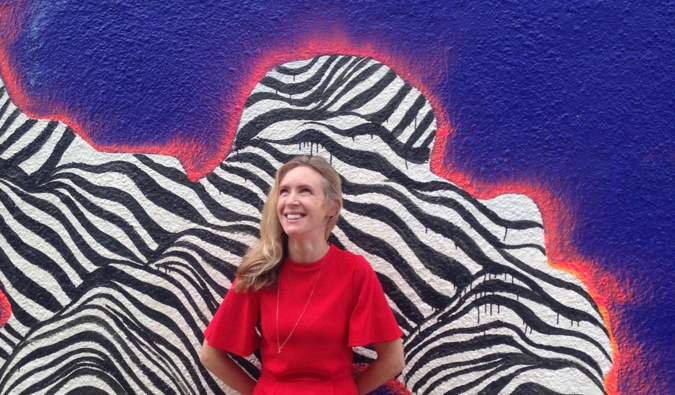
Best selling author Helen Russell posing for a photo
Posted: 4/4/2019 | April 4th, 2019

A few years ago, I read the book The Year of Living Danishly by Helen Russell. I think it originally came up as a suggested book on Amazon. I can’t fully remember. But, I stuck it in my queue, ordered it, and it sat on my bookshelf until it was time to read it. I couldn’t put it down. It was funny, well written, interesting, and an insightful look into Danish culture. It was one of my favorite books I read that year.

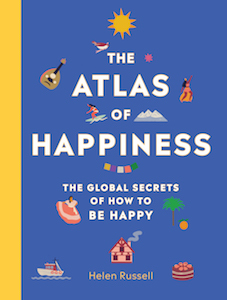
Last year, I somehow convinced Helen to speak at TravelCon and got to meet her in person. Now, she has a new book out called The Atlas of Happiness. It’s about why people in certain places are happier than others. It’s a phenomenal book (you should get it). Today, Helen shares some of what she learned in researching that book!

Here’s a funny thing: if you’ve been online today for more than a fraction of a second, you may have started to get the sense that the world is A Terrible Place. Even the committed traveler with an open mind could be forgiven for thinking that the outlook is pretty bleak.

And if you’ve seen the headlines today or been on social media and you’re feeling low as a result, you’re not alone.

It’s easy to get the idea that the world is becoming more miserable by the minute and that happiness is a luxury in these troubled times.

But over the past six years, I’ve learned that there are people all around the world finding ways to stay happy, every day. And that happiness is something we’re hardwired to seek out – wherever we are.

I started researching happiness in 2013 when I relocated from the UK to Denmark. I’d spent 12 years living and working in London as a journalist, and I had no intention of leaving, until out of the blue one wet Wednesday, my husband came home and told me he’d been offered his dream job…working for Lego in rural Jutland. I was skeptical to start with — I had a good career, a nice flat, great friends, close family — I had a life.

Okay, so my husband and I both worked long hours, we were tired all the time, and never seemed to be able to see each other very much. We regularly had to bribe ourselves to get through the day and we’d both been ill on and off for the past six months.

But that was normal, right?

We thought we were ‘living the dream.’ I was 33 years old and we’d also been trying for a baby for as long as either of us could remember, enduring years of fertility treatment, but we were always so stressed that it never quite happened.

So when my husband was offered a job in Denmark, this ‘other life’ possibility was dangled in front of us — the chance to swap everything we knew for the unknown. Denmark had just been voted the world’s happiest country in the UN’s annual report and I became fascinated by this. How had a tiny country of just 5.5m people managed to pull off the happiest nation on earth title? Was there something in the water? And if we couldn’t get happier in Denmark, where could we get happier?

During our first visit, we noticed that there was something a bit different about the Danes we met. They didn’t look like us, for starters — quite apart from the fact that they were all strapping Vikings towering over my 5’3” frame — they looked more relaxed and healthier. They walked more slowly. They took their time to stop and eat together, or talk, or just…breathe.

And we were impressed.

My Lego Man husband was sold on the idea and begged me to move, promising we’d relocate for my career next time. And I was so worn out by my hectic London life that I found myself agreeing. I quit my job to go freelance and decided I would give it a year, investigating the Danish happiness phenomenon first hand — looking at a different area of living each month to find out what Danes did differently.

From food to family life; work culture to working out; and design to the Danish welfare state — each month I would throw myself into living ‘Danishly’ to see if it made me any happier and if I could change the way I lived as a result. I decided I would interview as many Danes, expats, psychologists, scientists, economists, historians, sociologists, politicians, everyone, in fact, to try to uncover the secrets to living Danishly.

I documented my experiences for two UK newspapers before being asked to write a book: The Year of Living Danishly, Uncovering the Secrets of the World’s Happiest Country.

Since then, I’ve been humbled and moved to hear from readers from across the globe with wide-ranging life perspectives, but the one constant was a need to share the happiness secrets of their own cultures. Some of the themes that sprung out were universal — such as social interactions, exercising out of doors and finding a balance in life — while others were intriguingly unique.

The Atlas of Happiness book cover by Helen RussellSo I set out to research into unique happiness concepts from around the world, interviewing people internationally until The Atlas of Happiness — my new book-baby — was born. It isn’t a compendium of the happiest countries; instead, it’s a look at what’s making people happier in different places. Because if we only look at the countries already coming top of the happiness polls, we miss out on ideas and knowledge from cultures we’re less familiar with.

Nowhere is perfect. Every country has faults. But I wanted to celebrate the best parts of a country’s culture as well as national characteristics at their finest – because that’s what we should all be aiming for.

Here are a few of my favorites:

Did you know, for example, that in Portuguese there’s something called saudade — a feeling of longing, melancholy, and nostalgia for a happiness that once was — or even a happiness you merely hoped for?

And while Brazil may be famous for its carnival spirit, the flipside of this, saudade, is so central to the Brazilian psyche that it’s even been given its own official ‘day’ on the 30th of January every year.

Most of us will have experienced a bittersweet pleasure in moments of melancholy — flicking through old photos, or caring about anyone enough to miss them when they’re gone.

And scientists have found that this temporary sadness — counter-intuitively — makes us happier: providing catharsis; improving our attention to detail; increasing perseverance and promoting generosity. So we should all spend time remembering those we’ve loved and lost — then practice being a little more grateful for the ones still around.

Finland ranked number one in this year’s UN World Happiness report thanks to a great quality of life, free healthcare, and education funded by high taxes.

But there’s also something else the Finns enjoy that’s infinitely more exportable: kalsarikännit — defined as ‘drinking at home in your underwear with no intention of going out’ — a pursuit so popular it even has its own emoji, commissioned by The Finnish Foreign Ministry.

In common with most Scandinavians, Finns aren’t shy about disrobing, and they all have such enviably well-insulated houses that stripping down to their pants is apparently completely okay even when it’s minus 35 degrees outside. What you drink and crucially how much of it you knock back is down to the individual, but it’s a uniquely Finnish form of happiness and mode of relaxation that we can all give a go.

Best selling author Helen Russell working on her laptop

In Greece, they have a concept called meraki that refers to an introspective, precise expression of care, usually applied to a cherished pastime — and it’s keeping Greeks happy despite turbulent times. This is because having a hobby improves our quality of life according to scientists, and challenging ourselves to do something different also creates new neural pathways in our brain. Having a passion that you take pride can be of extra benefit to those who can’t say the same for their primary occupation.

Because meraki can make life worthwhile if your 9-5 is more of a daily grind. Many tasks that need to be taken care of on a day-to-day basis aren’t particularly challenging or inspiring – from filing, to raising purchase orders or even — dare I say it — some of the more gruelling aspects of parenting.

But we can break up the never-ending cycle of mundane work with our own personal challenges — things that we’re passionate about that we can genuinely look forward to doing. Our meraki.

Dolce far niente — or the sweetness of doing nothing — is a much-treasured concept in Italy — often hashtagged on Instagram accompanying pictures of Italians in hammocks. Okay, so Italy hasn’t exactly topped any happiness rankings in recent years, but the cliché of the carefree Italian still exists – and with good reason.

Italians do ‘nothing’ like no other nation and perfecting the art takes style and skill – because there’s more to it than meets the eye. It’s watching the world go by over coffee and a cornetto. It’s laughing at tourists. Or politicians. And crucially it’s about savoring the moment and really enjoying the present. Many of us search for relaxation by traveling to exotic locations, drinking to oblivion, or trying to blot out the noise of modern life.

But Italians let the chaos wash over them. Instead of saving up our ‘fun quota’ for an annual escape, they spread it over the minutes, hours and days throughout the year and ‘enjoy life’ in all its messy reality.

One of the happiest countries in the world, the Norwegians must be doing something right. And quite aside from their enviable Scandi-lifestyles and the safety net of all that oil, Norwegians have a secret ace card up their sleeves: a concept called friluftsliv. This roughly translates as ‘free air life’ and it’s a code of conduct as well as a life goal for most Norwegians – who like to spend time outdoors and get high, as often as possible.

Anyone who’s ever visited the country will know that if you meet a Norwegian out in nature, their objective tends to be the highest mountain nearby – and there’s a saying in Norway that “You must make an effort before you can have pleasure’.

Most Norwegians believe you have to work for things, to earn them with physical endeavors, battling the elements. Only once you’ve climbed a mountain in the rain and cold, can you truly enjoy your dinner. It’s an old fashioned approach to the good life but numerous studies show that using our bodies and getting out into nature as often as possible boosts mental and physical wellbeing.

Best selling author Helen Russell posing in front of a colorful mural

Which is all very well, on paper. But how to apply these principles and all the things I’d learned in real life? Well, I took it slowly — dolce far niente style. I had to learn not to be the archetypal Londoner, working all hours. Instead, I had to try relaxing once in a while.

Radical, I know.

Next, I got on the hobby train. I found my meraki in pottery, in cooking and trying out new recipes, often inspired by the countries I was researching. Some weeks, we ate well. Others, not so much (my husband still hasn’t forgiven me for ‘Russian month’). I’m not ashamed to say that I’ve done a fair amount of underwear-drinking, too.

The Finnish concept of kalsarikännit and I are now firm friends. And because I was working less and being more mindful of living well and looking after myself, it was relatively easy to adopt the Norwegian ethos of friluftsliv.

So now I try to ask myself: what did I do today? What did I climb? Where did I go? But the biggest mind shift was the realization that to be happy, we have to be comfortable being sad sometimes, too. That we’re at our healthiest and happiest when we can reconcile ourselves to all our emotions, good and bad.

The Portuguese saudade was a game changer for me — helping me to come to terms with the life I thought I’d have and find a way to move on, without resentment or bitterness. Because when you let go of these things, something pretty amazing can happen.

By learning from other cultures about happiness, wellbeing and how to stay healthy (and sane), I found a way to be less stressed than I was in my old life. I developed a better understanding of the challenges and subtleties of coming from another culture. My empathy levels went up. I learned to care, more.

Optimism isn’t frivolous: it’s necessary. You’re travelers. You get this. But we need to spread the word, now, more than ever. Because we only have one world, so it would be really great if we didn’t mess it up.

Hellen Russell is a British journalist, speaker, and the author of the international bestseller The Year of Living Danishly. Her most recent book, The Atlas of Happiness, examines the cultural habits and traditions of happiness around the globe. Formerly the editor of marieclaire.co.uk, she now writes for magazines and newspapers around the world, including Stylist, The Times, Grazia, Metro, and The i Newspaper.

Book Your Trip: Logistical Tips and Tricks

Book Your Flight
Find a cheap flight by using Skyscanner or Momondo. They are my two favorite search engines because they search websites and airlines around the globe so you always know no stone is left unturned.

Book Your Accommodation
You can book your hostel with Hostelworld as they have the largest inventory. If you want to stay somewhere other than a hostel, use Booking.com as they consistently return the cheapest rates for guesthouses and cheap hotels. I use them all the time.

Don’t Forget Travel Insurance
Travel insurance will protect you against illness, injury, theft, and cancellations. It’s comprehensive protection in case anything goes wrong. I never go on a trip without it as I’ve had to use it many times in the past. I’ve been using World Nomads for ten years. My favorite companies that offer the best service and value are:

Looking for the best companies to save money with?
Check out my resource page for the best companies to use when you travel! I list all the ones I use to save money when I travel – and that will save you time and money too!

The post The Atlas of Happiness: Discovering the World’s Secret to Happiness with Helen Russell appeared first on Nomadic Matt's Travel Site.


from Nomadic Matt's Travel Site https://ift.tt/2Ic8bao

Tuesday, April 2, 2019

W+R Studios is enhancing real estate agent success

[Note from editor: The “Mastermind Showcase” highlights companies and news from members of the Geek Estate Mastermind. Today’s showcase: W+R Studios]

While success in the real estate industry relies heavily on your expertise as an agent, there is a large percentage that comes back to your professional appearance and the impression you make on clients. Fortunately, W+R Studios is a software tool developer that works hard to ensure that you wow your clients through your intimate knowledge of the market.

Founded in 2008, W+R Studios is a privately held web software company, utilizing real estate-focused software to generate comparative market analysis (Cloud CMA) reports, as well as Cloud Streams — real-time alerts with industry notifications about new properties — and Cloud MLX to help you connect with other agents and deliver enhanced results to clients.

What we like: New to W+R Studios’ suite of services is Cloud Attract, a service which lets you to choose from optimized, ready-to-launch landing page templates. Each template is designed to draw in more connections and help you better serve your existing client base.

Learn More

The post W+R Studios is enhancing real estate agent success appeared first on GeekEstate Blog.


from GeekEstate Blog https://ift.tt/2OI41bl

So, I Got Stabbed in Colombia

A black and white photo of a quiet street in Bogota, Colombia

Posted: 4/2/2019 | April 2nd, 2019

Editor’s Note: I wavered on writing about this for a long time since I didn’t want to put people off on Colombia. As you can tell from my posts here, here, here, and here, I really love the country. I mean it’s awesome. (And there will be plenty more blog posts about how great it is.) I didn’t want to play into the negative image surrounding the country. But I blog about all my experiences – good or bad – and this story is a good lesson on travel safety, the importance of always following local advice, and what happens when you get complacent and stop doing so.

“Are you OK?”

“Here. Have a seat.”

“Do you need some water?”

A growing crowd had gathered around me, all offering help in one form or another.

“No, no, no, I think I’ll be OK,” I said waving them off. “I’m just a little stunned.”

My arm and back throbbed while I tried to regain my composure. “I’m going to be really sore in the morning,” I thought.

“Come, come, come. We insist,” said one girl. She led me back onto the sidewalk where a security guard gave me his chair. I sat down.

“What’s your name? Here’s some water. Is there anyone we can call?”

“I’ll be fine. I’ll be fine,” I kept replying.

My arm throbbed. “Getting punched sucks,” I said to myself.

Regaining my composure, I slowly took off the jacket I was wearing. I was too sore for any quick movements anyways. I needed to see how bad the bruises were.

As I did so, gasps arose from the crowd.

My left arm and shoulder were dripping with blood. My shirt was soaked through.

“Shit,” I said as I realized what had happened. “I think I just got stabbed.”

***

There’s a perception that Colombia is unsafe, that despite the heyday of the drug wars being over, danger lurks around most corners and you have to be really careful here.

It’s not a completely unwarranted perception. Petty crime is very common. The 52-year civil war killed 220,000 people — although thankfully this number has drastically dropped since the 2016 peace agreement.

While you are unlikely to be blown up, randomly shot, kidnapped, or ransomed by guerrillas, you are very likely to get pickpocketed or mugged. There were over 200,000 armed robberies in Colombia last year. While violent crimes have been on the decline, petty crime and robbery has been on the upswing.

Before I went to Colombia, I’d heard countless stories of petty theft. While there, I heard even more. A friend of mine had been robbed three times, the last time at gunpoint while on his way to meet me for dinner. Locals and expats alike told me the same thing: the rumors of petty theft are true, but if you keep your wits about you, follow the rules, and don’t flash your valuables, you’ll be OK.

There’s even a local expression about it: “No dar papaya” (Don’t give papaya). Essentially, it means that you shouldn’t have something “sweet” out in the open (a phone, computer, watch, etc.) that would make you a target. Keep your valuables hidden, don’t wander around places you shouldn’t at night, don’t flash money around, avoid coming out of nightlife spots alone at night, etc. Simply put: Don’t put yourself in a position where people can take advantage of you.

I heeded such advice. I didn’t wear headphones in public. I didn’t take my phone out unless I was in a group or a restaurant, or completely sure no one else was around. I took just enough money for the day with me when I left my hostel. I warned friends about wearing flashy jewelry or watches when they visited.

But, the longer you are somewhere, the more you get complacent.

When you see locals on their phones in crowded areas, tourists toting thousand-dollar cameras, and kids wearing Airpods and Apple Watches, you begin to think, “OK, during the day, it’s not so bad.”

The more nothing happens to you, the more indifferent you get.

Suddenly, you step out of a cafe with your phone out without even thinking about it.

In your hands is papaya.

And someone wants to take it.

***

It was near sunset. I was on a busy street in La Calendaria, the main tourist area of Bogotá. The cafe I had been at was closing, so it was time to find somewhere new. I decided to head to a hostel to finish some work and take advantage of happy hour.

I’d been in Bogotá for a few days now, enjoying a city most people write off. There was a charm to it. Even in the tourist hotspot of La Calendaria, it didn’t feel as gringofied as Medellín. It felt the most authentic of all the big Colombian cities I had visited. I was loving it.

I exited the cafe with my phone out, finishing a text message. It had slipped my mind to put it away. It was still light outside, there were crowds around, and lots of security. After nearly six weeks in Colombia, I had grown complacent in situations like this.

“What’s really going to happen? I’ll be fine.”

Three steps out of the door, I felt someone brush up against me. At first, I thought it was someone running past me until I quickly realized that a guy was trying to take my phone out of my hand.

Fight or flight set in — and I fought.

“Get the fuck off me!” I shouted as I wrestled with him, keeping an iron grip on my phone. I tried pushing him away.

“Help, help, help!” I yelled into the air.

I remember distinctly the confused look on his face as if he had expected an easy mark. That the phone would slip out of my hand and he’d be gone before anyone could catch him.

Without a word, he started punching my left arm, and I continued to resist.

“Get off me! Help, help!”

We tussled in the street.

I kicked, I screamed, I blocked his punches.

The commotion caused people to run toward us.

Unable to dislodge the phone from my hand, the mugger turned and ran.

***

After people helped me sit down and the adrenaline wore off, I got lightheaded. My ears rang. I had trouble focusing for a few moments.

Blood was dripping through my soaked shirt.

“Fuck,” I said looking at my arm and shoulder.

I tried to compose myself.

Having grown up surrounded by doctors and nurses, I ran through a quick “how bad is this” checklist in my mind.

I made a fist. I could feel my fingers. I could move my arm. “OK, I probably don’t have nerve or muscle damage.”

I could breathe and was not coughing up blood. “Ok, I probably don’t have a punctured lung.”

I could still walk and feel my toes.

My light-headedness dissipated.

“OK, there’s probably not too much major damage,” I thought.

Words I didn’t understand were spoken in Spanish. A doctor arrived and helped clean and put pressure on my wounds. A young woman in the crowd who spoke English took my phone and voice-texted my only friend in Bogotá to let her know the situation.

As an ambulance would take too long, the police, who numbered about a dozen by now, loaded me onto the back of a truck and took me to a hospital, stopping traffic on the way like I was an honored dignitary.

Using Google Translate to communicate, the police checked me in at the hospital. They took down as much information as they could, showed me a picture of the attacker (yes, that’s him!), and called my friend to update her about where I was.

As I waited to be seen by the doctors, the owner of my hostel showed up. After having taken my address, the cops had phoned up the hostel to let them know what happened and she had rushed down.

The hospital staff saw me quickly. (I suspect being a stabbed gringo got me quicker attention.)

We went into one of the exam rooms. My shirt came off, they cleaned my arm and back, and assessed the damage.

I had five wounds: two on my left arm, two on my shoulder, and one on my back, small cuts that broke the skin, with two looking like they got into the muscle. If the knife had been longer, I would have been in serious trouble: one cut was right on my collar and another especially close to my spine.

When you think of the term “stabbing,” you think of a long blade, a single deep cut into the abdomen or back. You picture someone with a protruding knife being rolled into the hospital on a stretcher.

That was not the case for me. I had been, more colloquially correct, knifed.

Badly knifed.

But just knifed.

There was no blade protruding from my gut or back. There would be no surgery. No deep lacerations.

The wounds wouldn’t require any more than antibiotics, stitches, and time to heal. A lot of time. (How much time? This happened at the end of January and it took two months for the bruising to go down.)

I was stitched up, taken for an X-ray to make sure I didn’t have a punctured lung, and required to sit around for another six hours as they did a follow-up. My friend and hostel owner stayed a bit.

During that time, I booked a flight home. While my wounds weren’t severe and I could have stayed in Bogotá, I didn’t want to risk it. The hospital refused to give me antibiotics and, being a little suspicious of their stitching job, I wanted to get checked out back home while everything was still fresh. When I was leaving the hospital, I even had to ask them to cover my wounds. They were going to leave them exposed.

It’s better to be safe than sorry.

***

Looking back, would I have done anything differently?

It’s easy to say, “Why didn’t you just give him your phone?”

But it’s not as if he led with a weapon. Had he done so, I obviously would have surrendered the phone. This kid (and it turned out he was just a kid of about 17) just tried to grab it from my hand, and anyone’s natural instinct would be to pull back.

If someone stole your purse, took your computer while you were using it, or tried to grab your watch, your initial, primal reaction wouldn’t be, “Oh well!” It would be, “Hey, give me back my stuff!”

And if that stuff were still attached to your hand, you’d pull back, yell for help, and hope the mugger would go away. Especially when it’s still daytime and there are crowds around. You can’t always assume a mugger has a weapon.

Based on the information I had at the time, I don’t think I would have done anything differently. Nature just set in.

Things could have been a lot worse: The knife could have been longer. He could have had a gun. I could have turned the wrong way, and that small blade could have hit a major artery or my neck. The knife was so small that I didn’t even feel it during the attack. A longer blade might have caused me to recoil more and drop my phone. I don’t know. If he had been a better mugger, he would have kept running forward and I wouldn’t have been able to catch up as the forward motion made the phone leave my hand.

The permutations are endless.

This was also just a matter of being unlucky. A wrong time and wrong place situation. This could have happened to me anywhere. You can be in the wrong place and the wrong time in a million places and in a million situations.

Life is risk. You’re not in control of what happens to you the second you walk out a door. You think you are. You think you have a handle on the situation — but then you walk out of a café and get knifed. You get in a car that crashes or a helicopter that goes down, eat food that hospitalizes you, or, despite your best health efforts, drop dead from a heart attack.

Anything can happen to you at any time.

We make plans as if we are in control.

But we’re not in control of anything.

All we can do is control our reaction and responses.

I really like Bogotá. I really like Colombia. The food was delicious and the scenery breathtaking. Throughout my visit there, people were inquisitive, friendly, and happy.

And when this happened, I marveled at all the people who helped me, who stayed with me until the police came, the many police officers who assisted me in numerous ways, the doctors who attended to me, the hostel owner who became my translator, and my friend who drove an hour to be with me.

Everyone apologized. Everyone knew this was what Colombia is known for. They wanted to let me know this was not Colombia. I think they felt worse about the attack than I did.

But this experience reminded me of why you can’t get complacent. I gave papaya. I shouldn’t have had my phone out. When I left the cafe, I should have put it away. It didn’t matter the time of day. That’s the rule in Colombia. Keep your valuables hidden. Especially in Bogota, which does have a higher rate of petty crime than elsewhere in the country. I didn’t follow the advice.

And I got unlucky because of it. I’d been having my phone out too often and, with each non-incident, I grew more and more relaxed. I kept dropping my guard down more.

What happened was unlucky but it didn’t need to happen if I had followed the rules.

This is why people always warned me to be careful.

Because you never know. You’re fine until you aren’t.

That said, you’re still unlikely to have a problem. All those incidences I talked about? All involved people breaking the ironclad “No Dar Papaya” rule and either having something valuable our or walking alone late at night in areas they shouldn’t have. Don’t break the rule! This could have happened to me anywhere in the world where I didn’t follow the safety rules you’re supposed to that help you minimize risk.

But, also know, if you do get into trouble, Colombians will help you out. From my hostel owner to the cops to the people who sat with me when it happened to the random guy in the hospital who gave me chocolate, it turns out, you can always depend on the kindness of strangers. They made a harrowing experience a lot easier to deal with.

I’m not going to let this freak incident change my view of such an amazing country. I’d go back to Colombia the same way I’d get in a car after a car accident. In fact, I was terribly upset to leave. I was having an amazing time. I still love Bogota. I still have plans to go back to Colombia. I have more positive things to write about this.

Learn from my mistake. Not only for when you visit Colombia but when you travel in general.

You can’t get complacent. You can’t stop following the rules.

And still go to Colombia!

I’ll see you there.

***

A couple of other points:

They did catch the kid who tried to mug me. There’s security everywhere in Bogotá. He made it one block before they caught him. My hostel owner tells me he is still in jail. He was only 17 too. I feel bad for him. There’s a lot of poverty in Bogotá. There’s a very stark income divide there. Assuming he’s not some middle-class punk, I can understand the conditions that led him to rob me. I hope his future gets brighter.

While the doctors were nice and the stitching turned out to be great, I wouldn’t go to a public hospital in Colombia again. That was not a fun experience. It wasn’t super clean, they had patients in the hallways, they didn’t give me antibiotics or pain medicine or cover my wounds, and they wanted to send me home without a shirt (thanks to my hostel owner for bringing me an extra!). There were just some basic things I was shocked they overlooked.

This is a strong case for travel insurance! I’ve always said travel insurance is for unknowns because the past is not prologue. In my twelve years of travel, I was never mugged — until I was. Then, needing medical care and a last-minute flight home, I was glad I had insurance. I needed it bad. It could have been a lot worse than a $70 hospital bill and a flight back home, too: if I had required surgery or had to be admitted to the hospital, that bill would have been a lot more. Don’t leave home without travel insurance. You never, ever know when you might need it, and you’ll be glad you had it!

Here are some articles on travel insurance:


Book Your Trip to Colombia: Logistical Tips and Tricks

Book Your Flight
Find a cheap flight by using Skyscanner or Momondo. They are my two favorite search engines because they search websites and airlines around the globe so you always know no stone is left unturned.

Book Your Accommodation
You can book your hostel with Hostelworld. If you want to stay somewhere other than a hostel, use Booking.com as they consistently return the cheapest rates for guesthouses and cheap hotels. I use them all the time.

Don’t Forget Travel Insurance
Travel insurance will protect you against illness, injury, theft, and cancellations. It’s comprehensive protection in case anything goes wrong. I never go on a trip without it as I’ve had to use it many times in the past. I’ve been using World Nomads for ten years. My favorite companies that offer the best service and value are:

Looking for the best companies to save money with?
Check out my resource page for the best companies to use when you travel! I list all the ones I use to save money when I travel – and I think will help you too!

Looking for more information on visiting Colombia?
Check out my in-depth destination guide to Colombia with more tips on what to see, do, costs, ways to save, and much, much more!

Photo credit: 1

The post So, I Got Stabbed in Colombia appeared first on Nomadic Matt's Travel Site.


from Nomadic Matt's Travel Site https://ift.tt/2Uo7KAg

Monday, April 1, 2019

Upcoming Private Geek Estate Mastermind Events in New York City

The Geek Estate Mastermind is a private group of independent thinkers, free from sponsored messages and noise. A real estate tech-think tank, of sorts.

There will be several invite-only events/meet-ups in New York City between April 8th and 19th.

Interested in attending or know someone who would be? Please request an invite.

PS: We put on events in other cities as well (Los Angeles was last week). Even if you’re not in NYC, please leave your email and city using the form below and we’ll contact you when events are happening nearby.

Request an Invite

The post Upcoming Private Geek Estate Mastermind Events in New York City appeared first on GeekEstate Blog.


from GeekEstate Blog https://ift.tt/2UmTlUH

Sunday, March 31, 2019

Meet the Real Estate Tech Founder: Natalia Karayaneva from Propy

In our latest real estate tech entrepreneur interview, we’re speaking withNatalia Karayaneva from Propy.

Without further ado…

Who are you and what do you do?

I studied software engineering and soon after that I got involved in real estate and started building and selling properties. For 12 years, I was part of the international real estate world, which included founding my own development company. All this time, I was interacting with foreign buyers who were having the same problems when buying property abroad; that’s how the idea of Propy was born. At the beginning of 2016, blockchain technology made it possible for me and my team to firmly believe that the real estate industry will never be the same again.

What problem does your product/service solve?

Using revolutionary blockchain technology, Propy is aiming to change not only the way we buy and sell real estate but also how we record it. The current process is not secure and lacks transparency. In the U.S. alone, there is $1billion in annual loss due to a title and wire fraud. Propy facilitates paperwork and records deeds via blockchain so the process cannot be hacked. Everything happens online which lets you buy property easily and remotely – as it is common now for people to live, work in, and travel to other cities and countries. You don’t have to leave home to complete the entire transaction which is great news for global citizens, international business persons and, of course, millennials. Millennials dislike visiting banks and dealing with paper and bureaucracy. Thus automation of the real estate purchase process can increase home buying rates amongst future generations.

What are you most excited about right now?

After we successfully completed the first ever real estate transaction on the Ethereum blockchain and released our adaptive transaction tool that allows us to process deals worldwide, I’m now looking forward to announcе several new pilot programs with governments that are interested in adopting our Blockchain Registry and onboard the most progressive brokerages (three of them will be revealed soon) to use our Transaction Management Platform in their offices.

What’s next for you?

After entering the Asian, European and US markets with our transaction platform this year, we have serious interest from both real estate corporations and governments to integrate our technology.

We’re also focusing on our promotional campaigns that aim to inform agents about the advantages of Propy and showing them how to use the platform for their deals.

2019 is set to be the year of change, evolution, and innovation. Stay tuned for the official launch date of our website and the full roadmap for this year on our Medium blog and our newsletter.

What’s a cause you’re passionate about and why?

All my life I’ve been supported by talented people and therefore I am passionate about helping the younger part of  society that doesn’t have the same opportunities or access to basic needs such as education. I am also passionate about the sustainable and green urban environment and support the measures governments do to reduce CO2 emissions.

Meet The RE Tech EntrepreneurThanks to Natalia for sharing his story. If you’d like to connect, find her on LinkedIn here.

We’re constantly looking for great real estate tech entrepreneurs to feature. If that’s you, please read this post — then drop me a line (drew @ geekestatelabs dot com).

The post Meet the Real Estate Tech Founder: Natalia Karayaneva from Propy appeared first on GeekEstate Blog.


from GeekEstate Blog https://ift.tt/2FIta1q